
Have you ever wondered why some people have endless energy while others prefer to sleep in? or why some people gain weight easily while others stay thin no matter what they eat? According to Ayurveda, the answer lies in your “Dosha”—your unique mind-body blueprint.
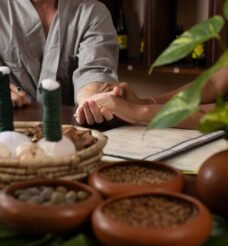
At Aida Ayurveda Resort, we believe that true health begins with understanding who you are. Before we prescribe any oil treatment or diet plan, we determine your dominant Dosha: Vata, Pitta, or Kapha.
Here is a simple guide to understanding these energy types and how we customize our yoga and wellness programs for them.
1. Vata: The Energy of Movement
People with a dominant Vata dosha are often creative, energetic, and quick-thinking. Physically, they tend to be slender and agile. However, when Vata is out of balance, they can feel anxious, restless, or suffer from insomnia and joint pain.
For Vata types, high-intensity cardio can actually be harmful because it increases their natural restlessness. Instead, they need grounding. At Aida Ayurveda Resort, we focus on balancing poses that require focus and stability, helping to calm their active minds.
Finding Balance: Our guests practicing the Tree Pose (Vrksasana) in the garden to ground their energy and improve focus.
2. Pitta: The Energy of Transformation
Pitta types are fiery, ambitious, and sharp. They have good digestion and a strong metabolism. However, this inner fire can easily lead to “overheating.” When out of balance, Pitta types suffer from skin rashes, heartburn, and irritability or burnout.
Because Pitta types are naturally competitive, they often push themselves too hard in the gym. At Aida Ayurveda Resort, we teach Pitta guests to slow down. We practice cooling yoga flows, often outdoors in our shaded gardens, allowing the fresh air and greenery to reduce their internal body heat.
Cooling Down: Stretching outdoors allows Pitta body types to release tension without overheating the body.
3. Kapha: The Energy of Structure
Kapha types are known for their strength, endurance, and calm nature. They have strong immunity and sleep soundly. However, their slow nature means they can easily become lethargic. When Kapha is out of balance, it leads to weight gain, water retention, and a lack of motivation.
Unlike Vata and Pitta types who need to relax, Kapha types need stimulation. Our therapists and instructors encourage Kapha guests to engage in more vigorous movement to “wake up” their metabolism and shake off stagnation.
Building Heat: Engaging the core muscles helps Kapha body types boost their metabolism and fight lethargy.
4. Why One-Size-Fits-All Yoga Doesn’t Work
If you go to a standard gym class, everyone does the same exercise. But in Ayurveda, what cures one person might harm another. A fast-paced flow might invigorate a Kapha person but cause anxiety in a Vata person.
This is why our yoga sessions at Aida are small and personalized. Our instructors pay close attention to your form and your limitations. We use props, adjustments, and specific modifications to ensure the movement heals your specific body type.
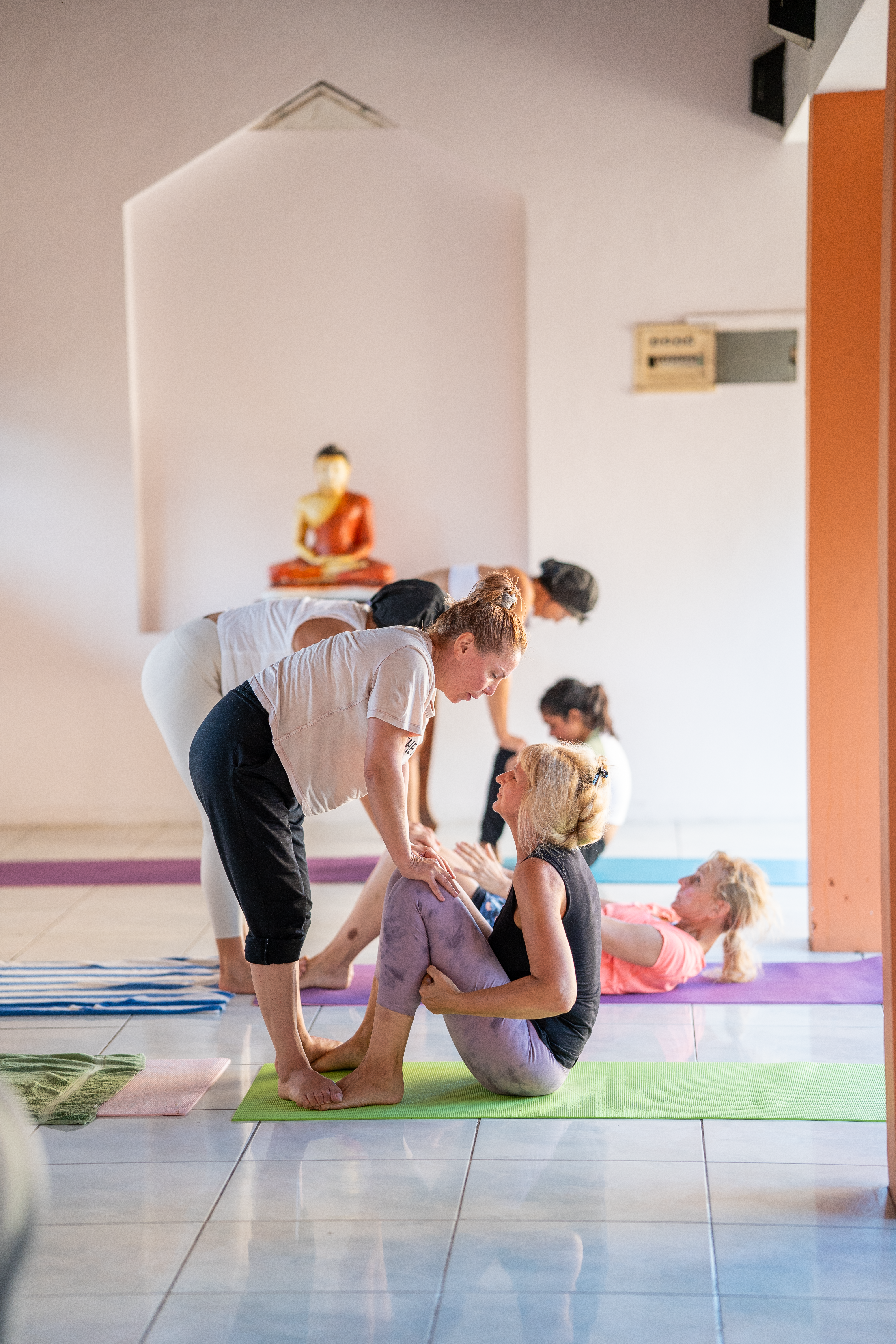
Personalized Attention: Our instructors provide hands-on guidance to ensure you are moving safely and effectively for your body type.
5. The Power of Breath (Pranayama)
No matter what your Dosha is, the bridge between the body and the mind is the breath. Many of our guests arrive with shallow, stressed breathing patterns without even realizing it.
We end our sessions with Pranayama (breath control) and meditation. Sitting quietly in nature helps Vata types settle their thoughts, helps Pitta types cool their anger, and helps Kapha types find mental clarity.
Inner Peace: A guest enjoys a moment of stillness and deep breathing in the peaceful surroundings of our resort.
Discover Your Dosha at Aida Ayurveda Resort
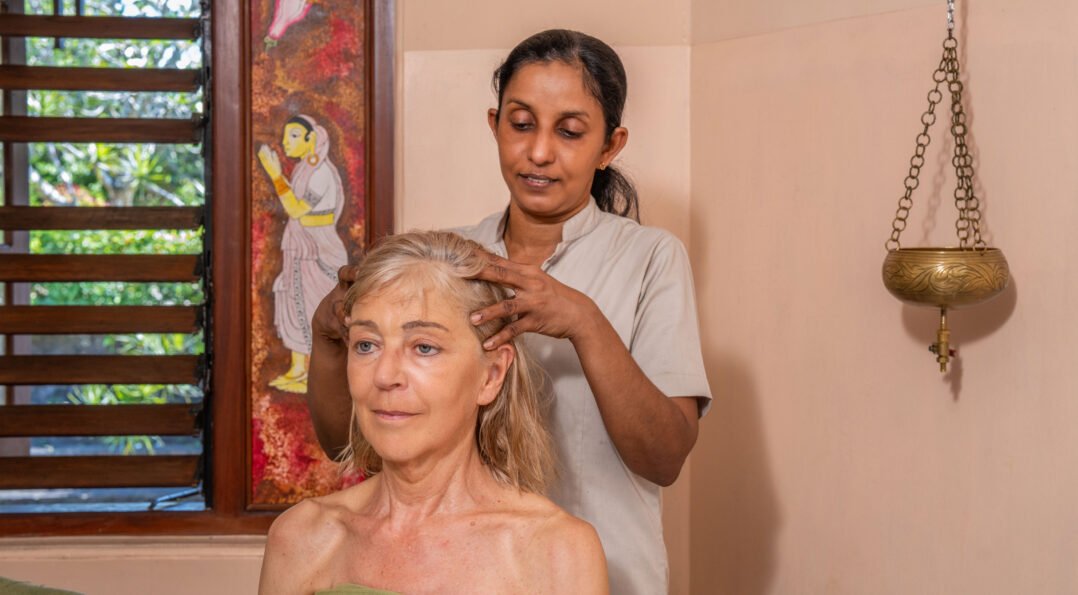
Reading about Doshas is a good start, but the best way to know your body is a pulse diagnosis with an Ayurvedic doctor. Whether you need to calm down, cool down, or wake up, our team in Bentota is ready to curate a plan just for you.